

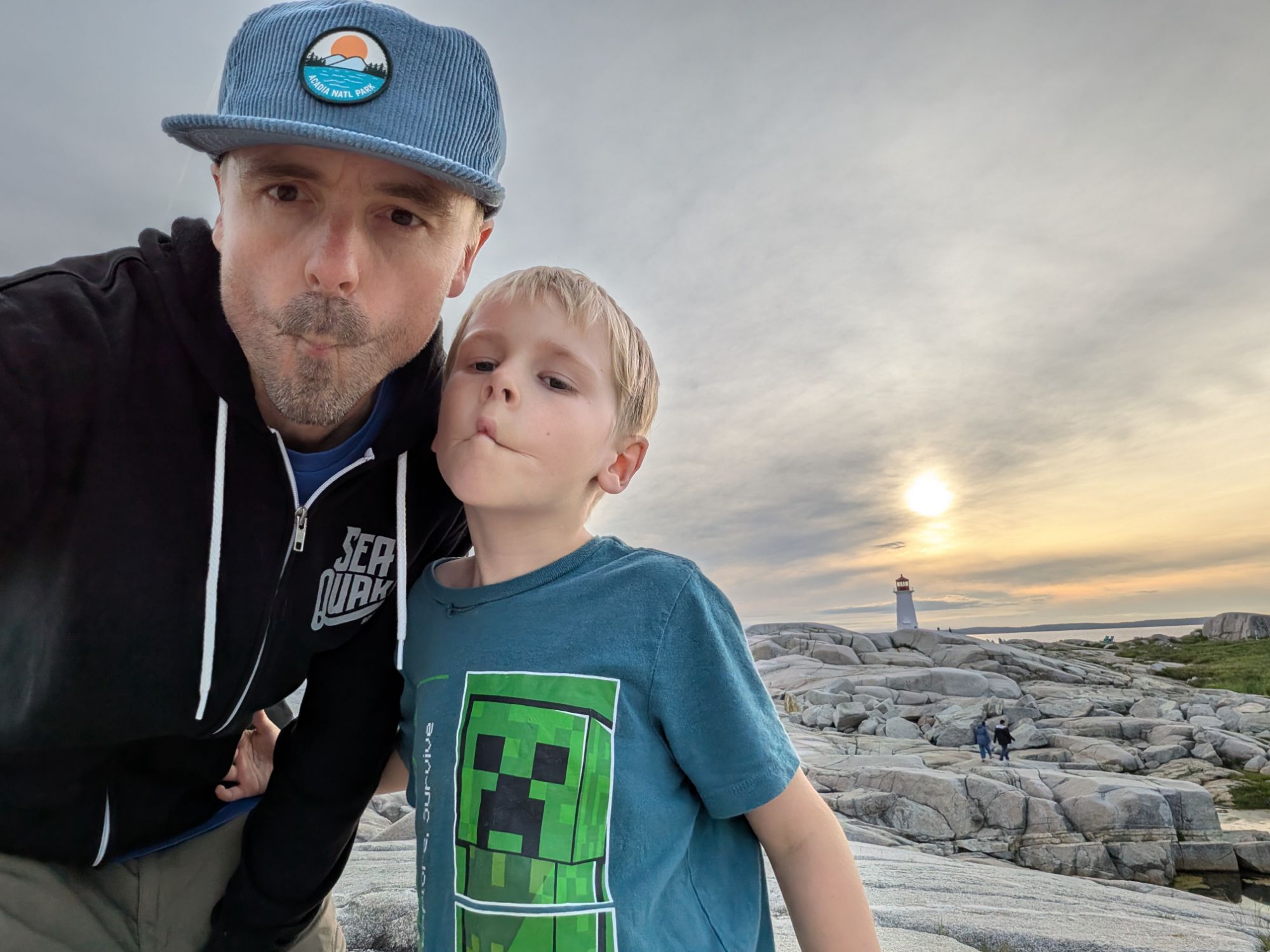
After crossing into Canada and settling into the rhythm of Fundy National Park, our Canadian Coastal Quest rolled east into Nova Scotia. We had already launched the trip in The Quest Begins, worked our way through Maine and Acadia, crossed the border into New Brunswick, and watched the Bay of Fundy tides do their twice-daily disappearing act.
Now we were entering Canada’s Ocean Playground.
Nova Scotia is almost completely surrounded by the Atlantic Ocean, which means water is never far away. It has more than 13,000 kilometers of coastline, a deep Mi’kmaw history stretching back more than 13,000 years, working fishing villages, one of the most famous lighthouses in Canada, the capital city of Halifax, and the wild cliffs and highlands of Cape Breton Island.
In Dad terms, this means there are plenty of places for kids to climb rocks, plenty of places for Stella to sniff things, plenty of history for Mom to turn into an educational moment, and plenty of scenic roads where Dad says, “Wow, look at that,” while everyone else is looking at tablets.
King Neptune Campground Near Peggy’s Cove
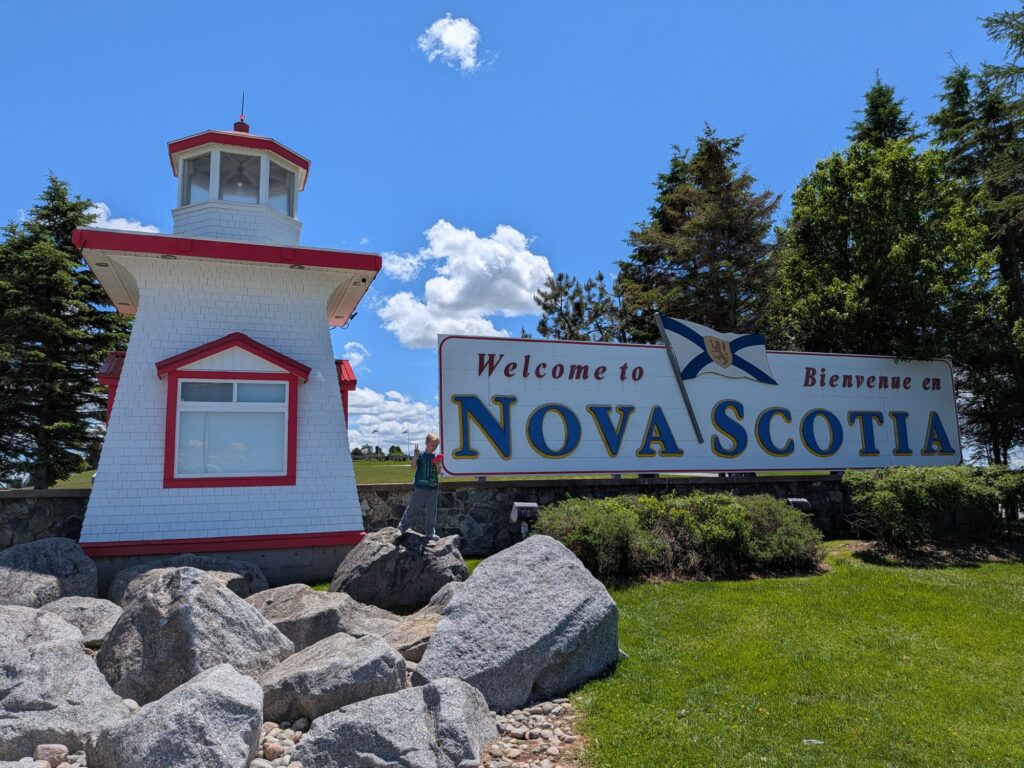
Our first Nova Scotia base camp was King Neptune Campground, located in Indian Harbour just a few kilometers from Peggy’s Cove. This was one of those campgrounds where you pull in, look around, and immediately feel like you made a very good decision.
Every site seemed to have some kind of view of the bay, and our site had a waterfront view that landed high on the list of best campsites from the trip. We have had some wonderful campsite views over the years, but this one was special. The camper was perched near the water, with small islands, rocks, and waves just outside the door.
Of course, the first question in the boys’ minds whenever we reach a campground is not, “Dad, what incredible natural wonder are we about to experience?”
It is: “Do they have Wi-Fi?”
This one did have Wi-Fi. It was slow, but it existed, which was enough to create hope and frustration in equal measure. Nothing tests a child’s patience like a buffering screen after a long travel day.
Cool Weather, Coastal Roads, and the Lighthouse Route
Everywhere we went, locals told us that the cold and rainy weather was very unseasonable. They said it almost apologetically, like Nova Scotia had invited us over and forgotten to set out the nice weather.
But this Dad did not mind it at all.
After years of hot, muggy Georgia summers, cool coastal air felt pretty great. Yes, it rained. Yes, the wind blew. Yes, the boys occasionally acted like they had personally been wronged by clouds. But cool weather is hiking weather. Cool weather is camper-sleeping weather. Cool weather is “put on a rain jacket and go see the thing anyway” weather.
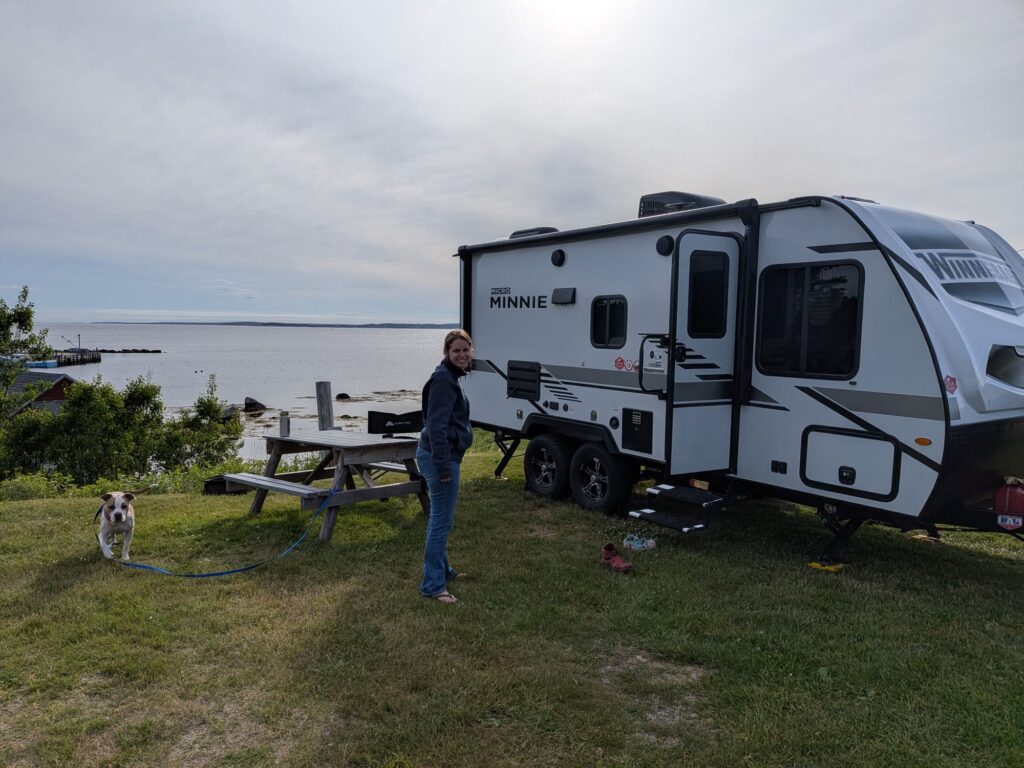
The drive in and around Peggy’s Cove is absolutely picturesque. This stretch is part of Nova Scotia’s Lighthouse Route, and it earns the name. Every turn brings a quaint home, a rock outcropping, a tiny cove, a small bay, a fishing boat, or a view that makes you wonder how practically every house ended up with waterfront scenery.
Just across from the campground, we found an antique store filled with treasures. Cassy and Dad picked out some gifts and artwork for the house, because apparently the camper can always hold one more thing if that thing is “special.”
Peggy’s Cove: Granite, Lighthouse Views, and a New Friend From Alberta
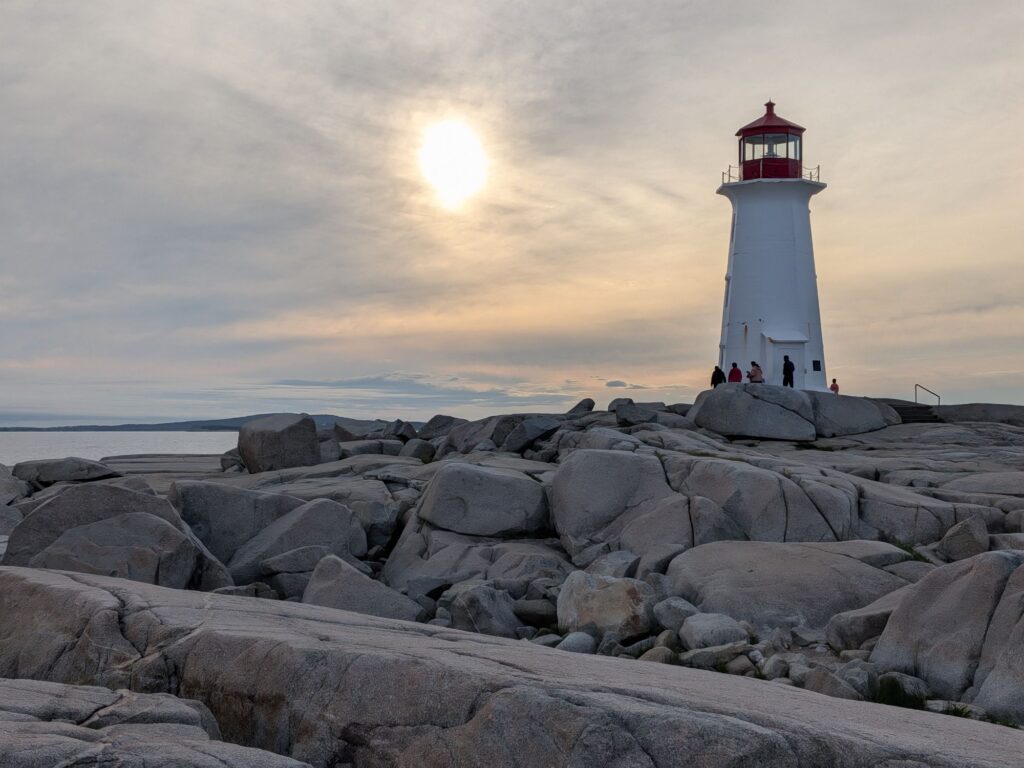
We spent our first evening in Nova Scotia at Peggy’s Cove, home of the famous Peggy’s Point Lighthouse. This is one of those places that is famous for a reason. The village is small, the coastline is dramatic, and the lighthouse sits on smooth granite above the Atlantic like it was placed there for postcards.
The boys immediately started climbing on the rocks, because if there are rocks, our family is going to climb them. Peggy’s Cove is a beautiful place to explore, but it is also a place to respect. The black rocks near the water are dangerous, and the waves here can be powerful. We stayed well back from the surf and stuck to the safer dry granite.
While Madison and I were climbing, we accidentally became part of someone else’s art project. A photographer was capturing the lighthouse reflected in a small pond, and we happened to be standing in the right place at the right time. Later, we met him. His name was Gary, he was from Alberta, and he turned out to be one of the nicest people.
That has become one of our repeating Canada observations: everyone is so nice.
Now, I realize that is a broad statement. Surely somewhere in Canada there is someone who cuts people off in traffic, does not return their shopping cart, and complains about campground children. But we have not met that person yet.
Photo Coming Soon!
Halifax and the Maritime Museum of the Atlantic
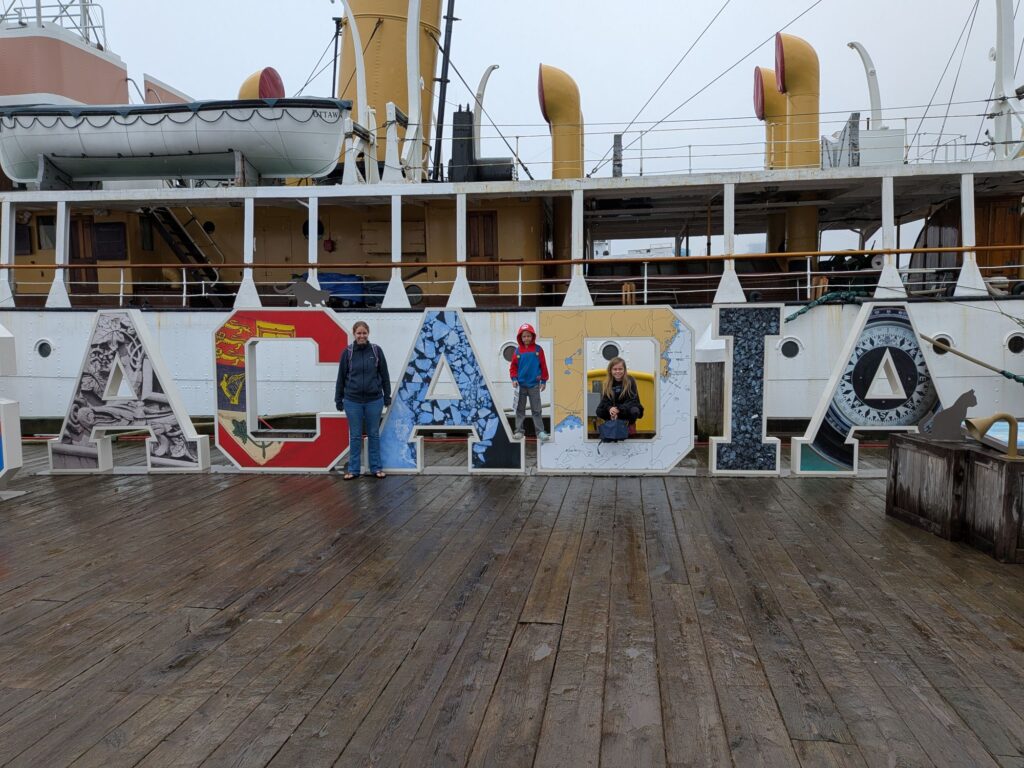
From Peggy’s Cove, we made our way into Halifax for a museum day at the Maritime Museum of the Atlantic. There was a lot to take in, and this was one of those museums where Dad could have stayed longer than the kids were willing to allow.
First, the museum helped us better understand that this region has been home to the Mi’kmaq for thousands of years. Long before European ships arrived in the harbor, Mi’kmaw people lived, traveled, fished, hunted, built, told stories, and navigated this land and water. Birchbark canoes were a key technology, made with natural materials and sealed with spruce or pine resin. That is the kind of practical engineering that makes Dad stop and stare at a display case for too long.
Second, we learned more about the Halifax Explosion. On December 6, 1917, during World War I, the French munitions ship Mont-Blanc collided with the Norwegian vessel Imo in Halifax Harbour. The Mont-Blanc was carrying explosives, fuel, and wartime cargo. The resulting explosion devastated a large part of the city, killed nearly 2,000 people, injured thousands more, and became one of the largest human-made explosions before the atomic age.
It is hard to stand in a museum with kids and explain a disaster like that. But it is also part of why we visit these places. Travel is not just scenery and snacks. Sometimes it is learning what a city survived.
Third, the Titanic exhibit gave us another Halifax connection. After the Titanic sank in 1912, ships from Halifax were involved in the recovery effort, and many victims were brought back to the city. The museum has artifacts, photographs, and stories that connect Nova Scotia to one of the most famous maritime disasters in history.
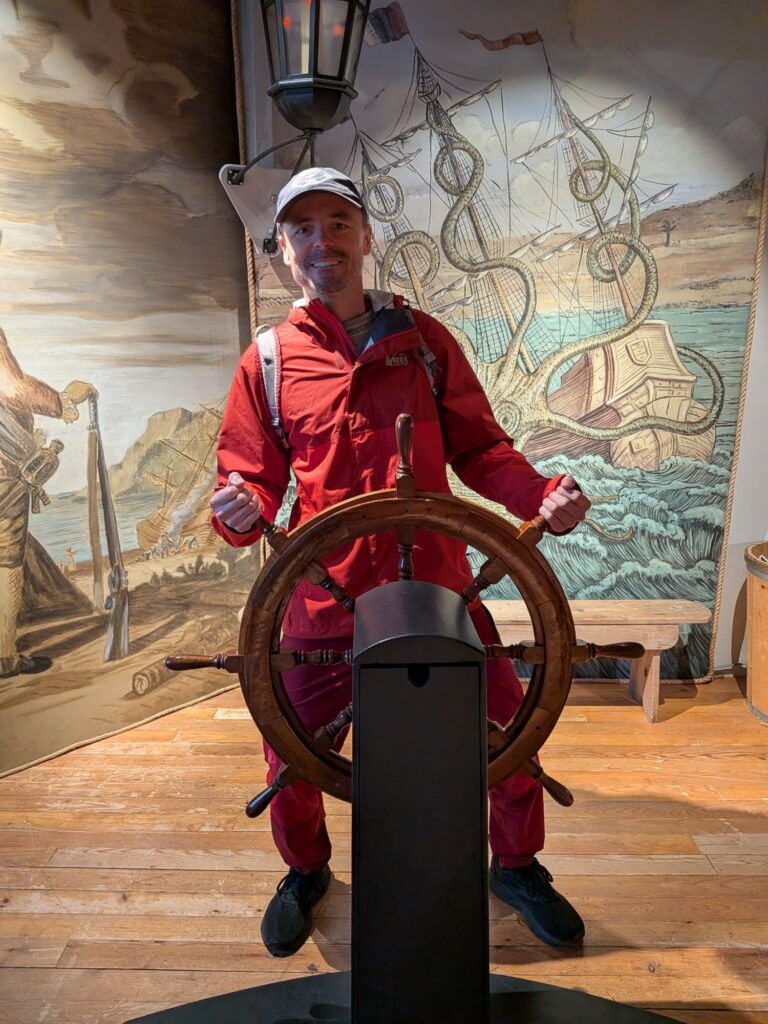
Fourth, there was a lot of ship fun. Models, boats, engines, exhibits, artifacts, stories, and enough maritime history to keep Dad fully engaged while the kids slowly started shifting into wifi seeking mode.
After the museum, we grabbed Mediterranean food, which felt like a major road trip victory. Finally, some ethnic food. We also found Wi-Fi at Café du Port, which may have mattered more to the boys than the entire sweep of Atlantic maritime history.
Dad and Stella Take on the Peggy’s Cove Conservation Area
The next adventure was not exactly planned. It was raining hard, but Stella needed exercise and Dad needed a trail, so we headed into the Peggy’s Cove Preservation Area.
This landscape was left behind by retreating glaciers and feels wild in a very different way than the forests of Fundy or Maine. It is oceanfront barrens, bogs, coastal rock, and enormous granite boulders scattered across the land like giants had been playing marbles.
The trail was not easy to follow. There were boulders everywhere, the rain was coming down, and Stella and Dad got a little turned around. Not lost, exactly. More like “temporarily engaged in advanced route-finding.”
We followed the coastal rocks, scrambled, jogged, backtracked, and turned it into a very nice trail-run-hike hybrid. Stella was thrilled. Dad was soaked. The landscape was unforgettable.
Sometimes the best hikes are the ones that start with, “This probably won’t take too long.”
Millbrook Cultural and Heritage Centre
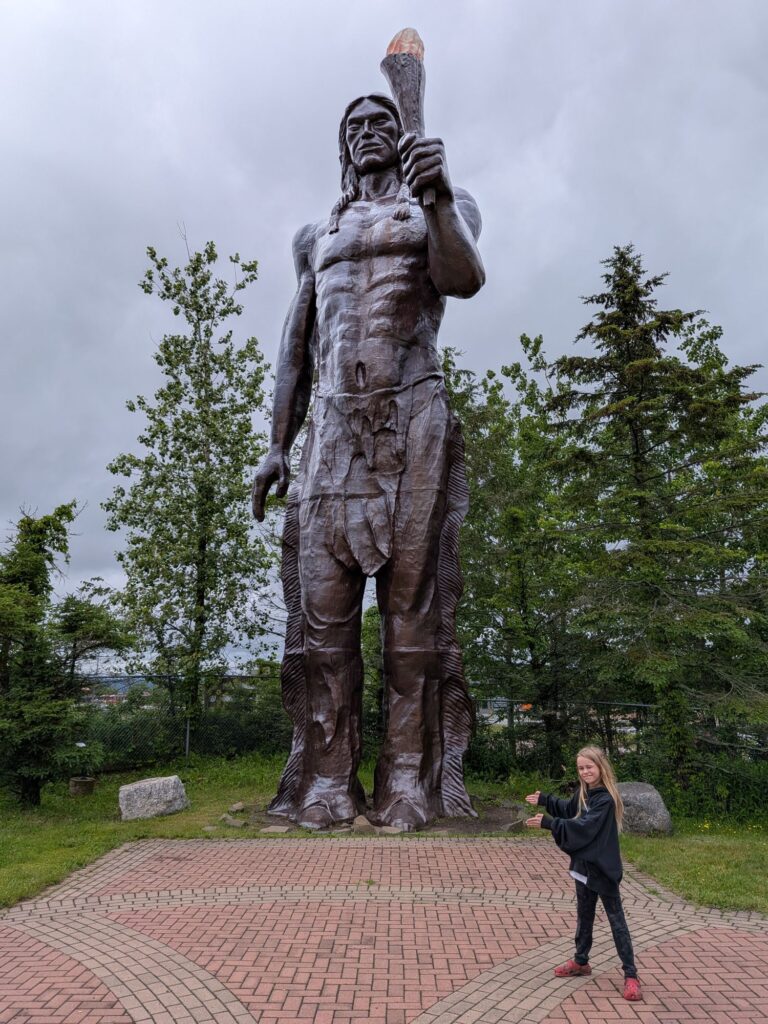
On the drive toward Battery Provincial Park, which was our stopover on the way to Cape Breton Highlands National Park, we stopped at the Millbrook Cultural and Heritage Centre near Truro.
This was an important stop for us. The centre shares the history and culture of the Mi’kmaq people, whose homeland, Mi’kma’ki, includes Nova Scotia and much of Atlantic Canada. We learned more about Mi’kmaw ancestry, the deep timeline of people living here after the glaciers retreated, and how closely culture, land, animals, plants, water, and spirit are connected.
One teaching that stayed with me was the idea that power and spirit exist in everything you can see, feel, touch, hear, and experience. That is a very different way of looking at the world than the rushed, transactional way we often move through it.
Road trips can do that. They can slow you down long enough to hear something you would have missed if you were only trying to get to the next campground.
Battery Provincial Park and St. Peters Canal
We stopped for one night at Battery Provincial Park near St. Peter’s, Cape Breton. The park sits beside the St. Peters Canal National Historic Site, which connects St. Peters Bay on the Atlantic side with the Bras d’Or Lake system.
This canal is a fun one for Dad explanations because it has a lock. A lock works kind of like an elevator for boats. One side of the water is at a different level than the other, so the gates close, water either fills or drains, and the boat rises or lowers until it can safely move through.
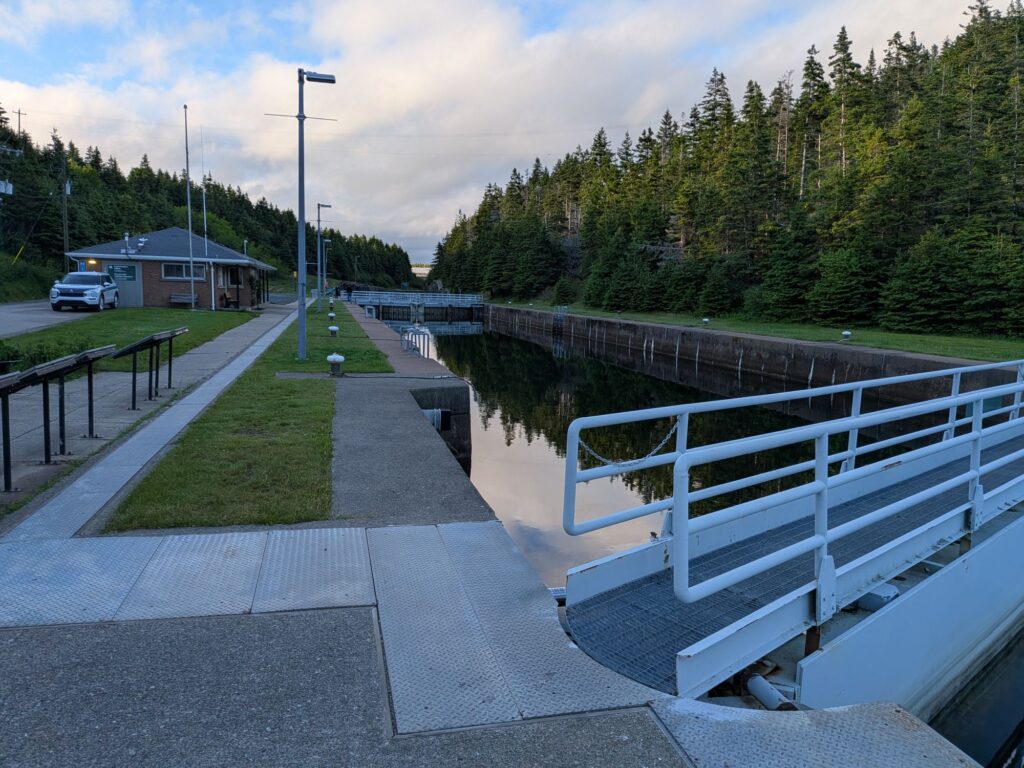
St. Peters Canal uses a tidal lock because the water levels on each end can change differently. For kids, this is a practical science lesson. For Dad, it is an excuse to explain pressure, gates, water levels, and boats until someone says, “Can we go back to the camper now?”
The weather had been cold and rainy for almost two days, but the clouds finally parted after we arrived. The evening turned beautiful, which felt like Nova Scotia rewarding us for sticking it out.
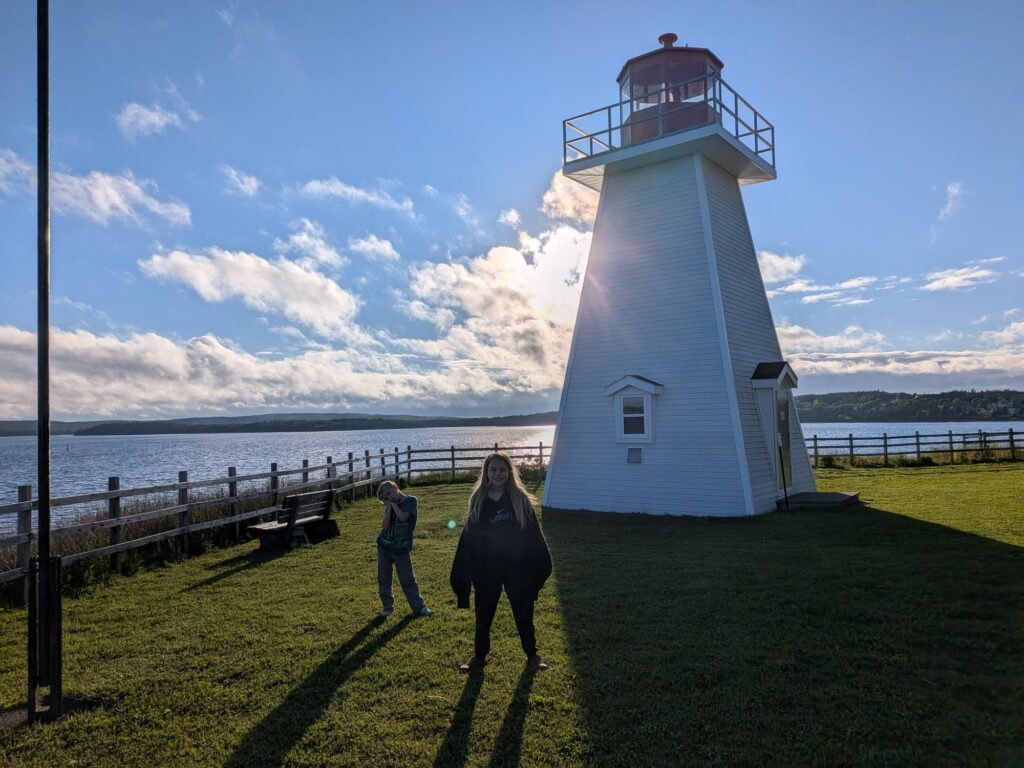
Caption: Battery Provincial Park was a peaceful stopover beside the historic St. Peters Canal.
Cape Breton Miners Museum
In Glace Bay, we visited the Cape Breton Miners Museum, one of the most unique museum stops of the trip.
The museum sits on the site of a former coal mine and tells the story of Cape Breton’s coal mining industry, from early coal discoveries in the 1600s and early mining in the 1700s through the industrial coal era and the closure of the last underground coal mine in Cape Breton in 2001.
The coal seams here extend far out under the Atlantic Ocean, which is both fascinating and slightly unsettling. There is something wild about standing on land and realizing that generations of miners worked underground, under the sea, following coal seams beneath the ocean floor.
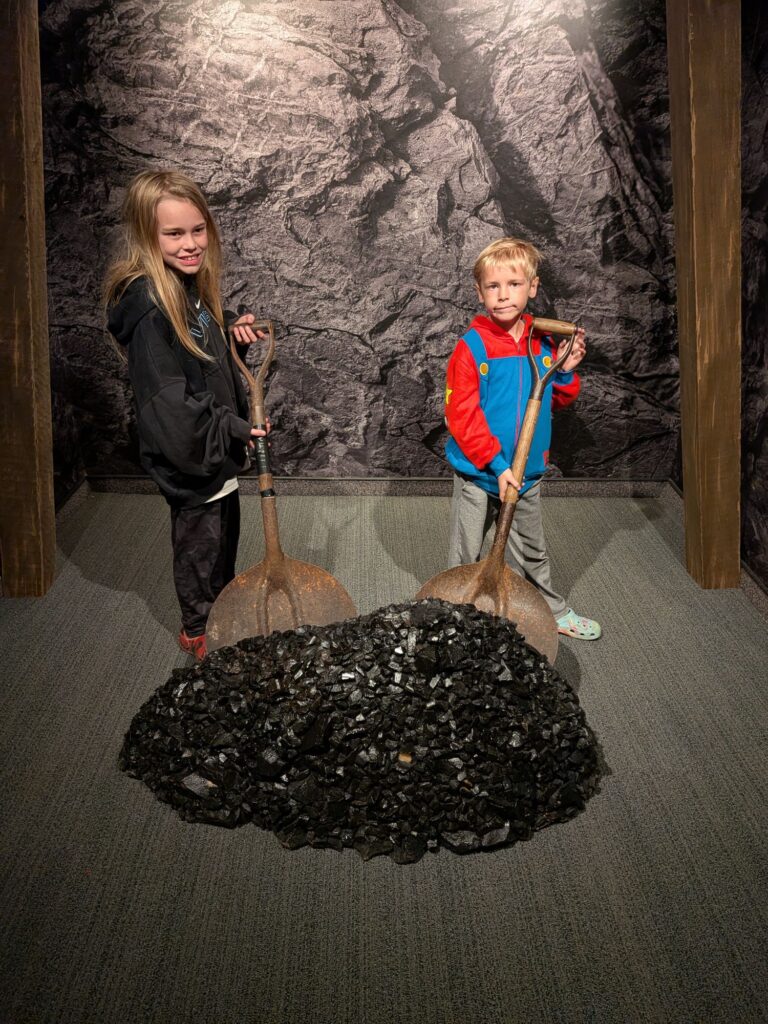
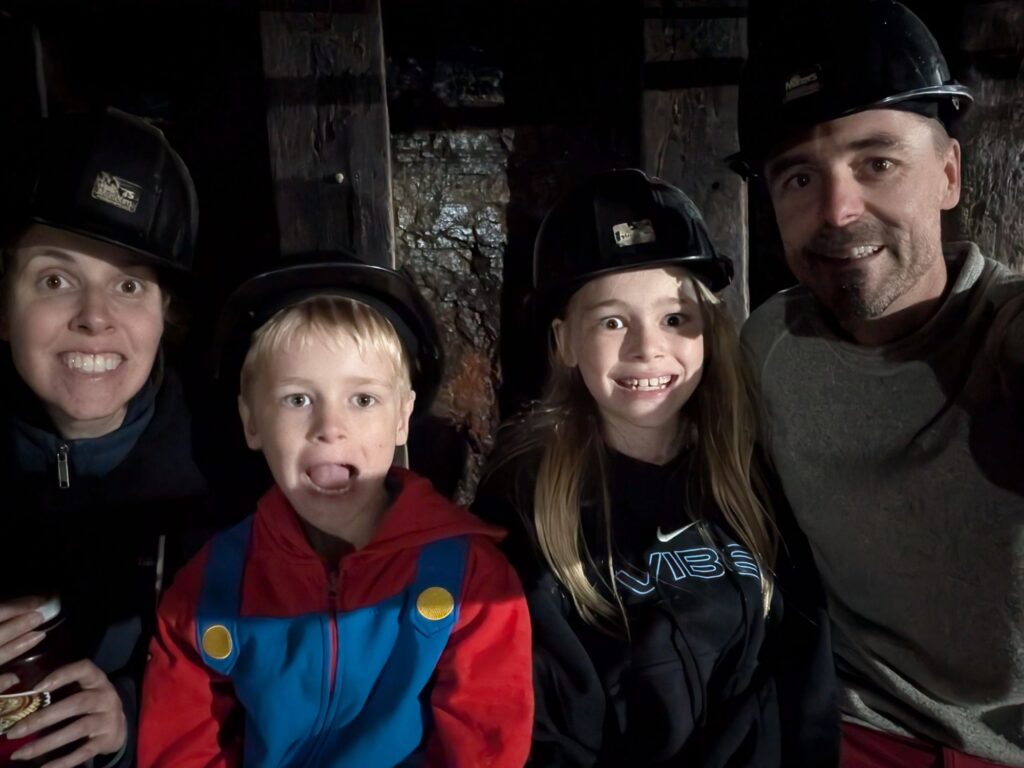
The museum starts with exhibits and a virtual coal mine experience, then continues with an actual underground mine tour. Our tour was led by a retired miner who had worked in the industry himself. That changed everything. It was not just a museum guide reciting facts. It was a man explaining a life he knew.
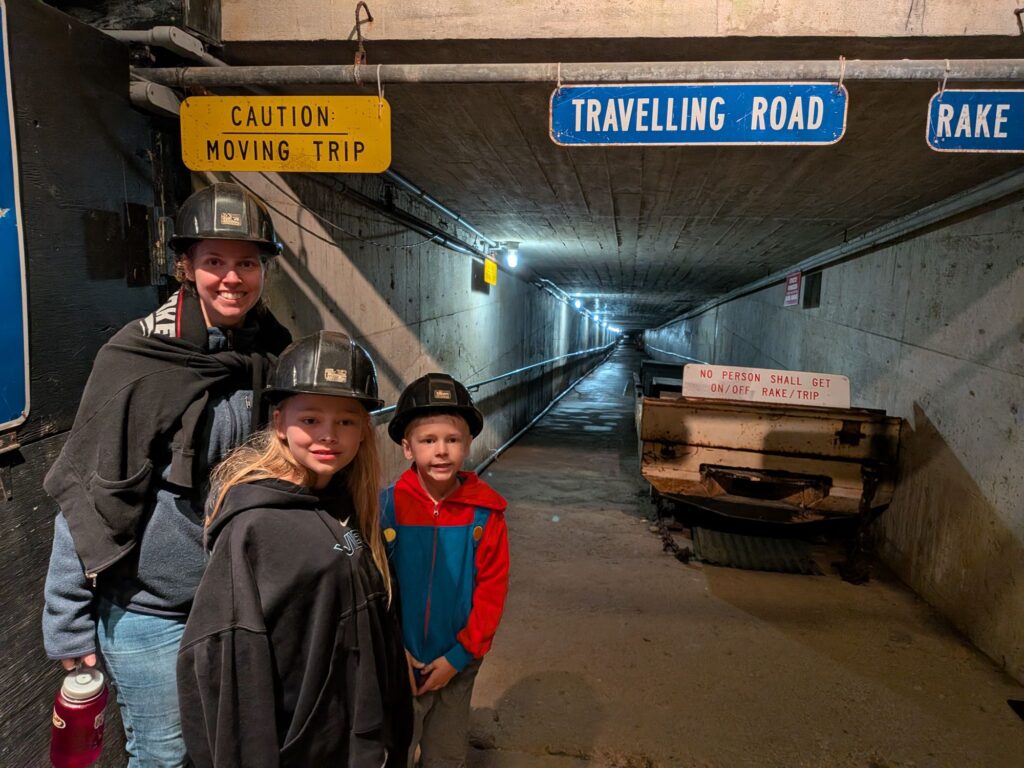
We learned about the early days when miners were sometimes paid in company scrip that could only be used at company stores, which kept families trapped in a company-controlled economy. We learned about dangerous conditions, long hours, mining families, pit ponies, labor struggles, and the way entire communities were built around coal.
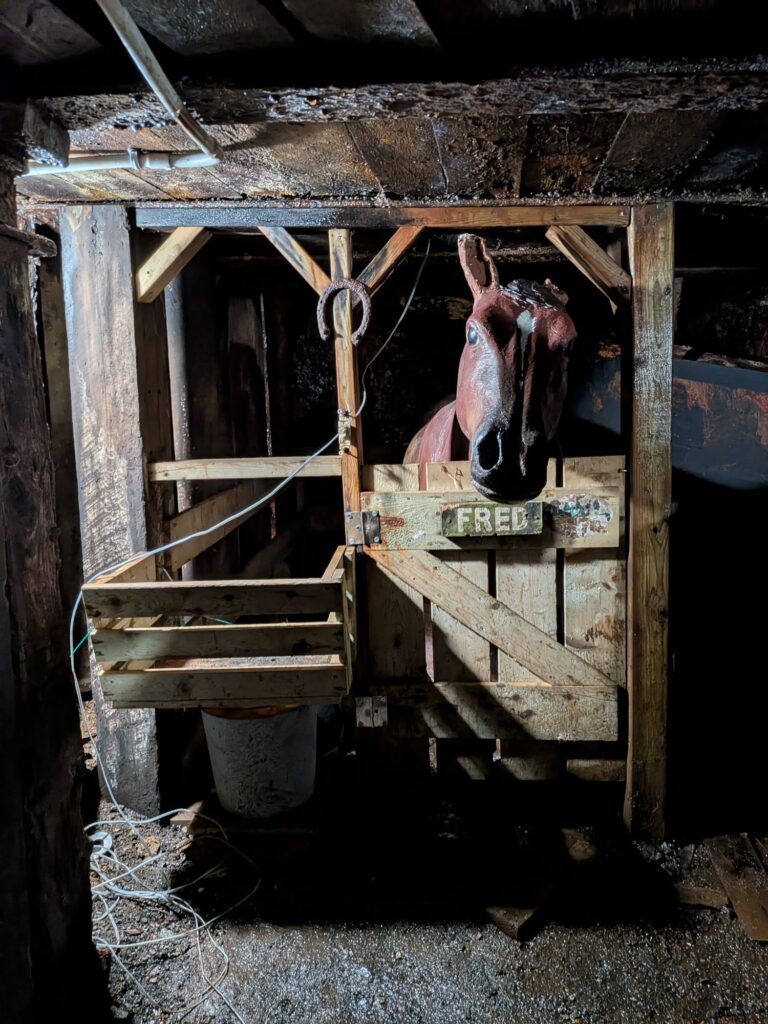
One of the hardest parts to explain to the boys was how young children could end up in the mines. In company villages, if a miner died and the family wanted to keep their house, another male family member often had to go to work. Sometimes that meant boys went underground far too young.
It was heavy, but it was important.
And in one of the great signs of how far Nova Scotia and the energy world have come, the Cape Breton Miners Museum has incorporated solar power. Imagine that: a museum preserving the history of an industry that powered communities with coal for generations now using renewable energy to help power its future.
Dad’s clean energy brain appreciated that one.
On to Cape Breton Highlands National Park
From Glace Bay, we took the winding roads toward Cape Breton Highlands National Park. This is the Nova Scotia of cliffs, ocean, mountains, forests, moose, winding roads, and the famous Cabot Trail.
We arrived at Broad Cove Campground, set the camper down, and got settled for the evening. Broad Cove is near Ingonish and sits close to the Atlantic, which made it a great base for exploring the eastern side of the park.
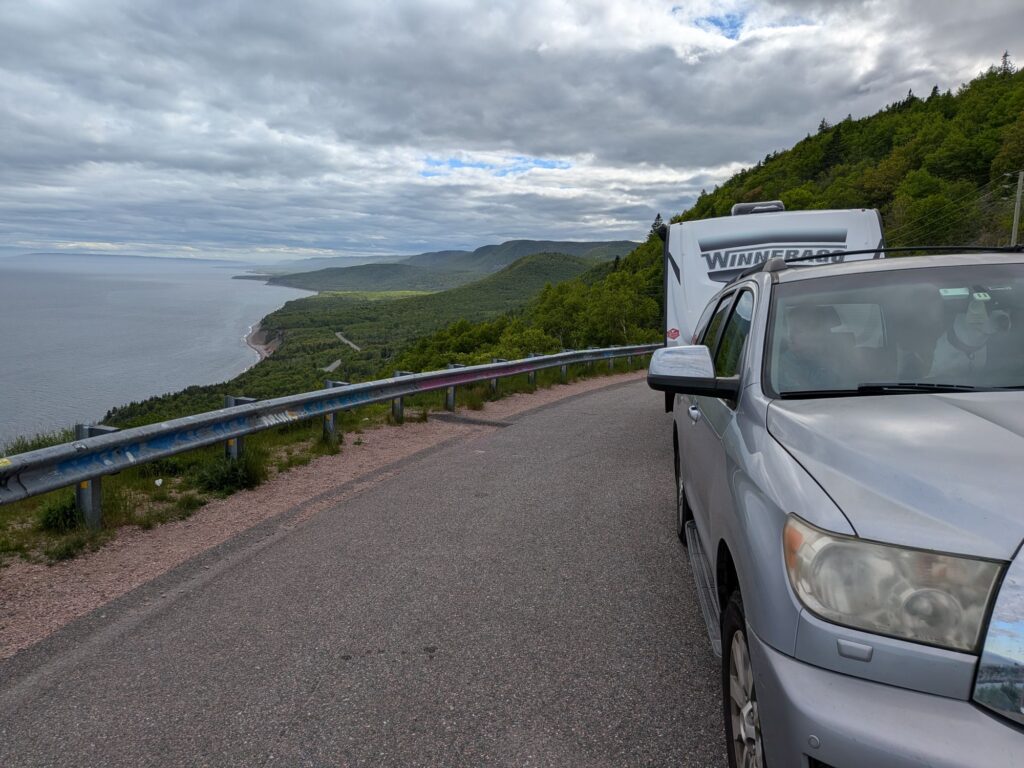
Cape Breton Highlands feels different from the rest of the trip. The roads climb. The cliffs drop. The ocean appears suddenly around corners. The forest changes with elevation. And the Cabot Trail keeps delivering one dramatic view after another.
It is the kind of road where Dad wants to pull over at every lookout and the kids eventually start asking if all views count as “a stop.”
The answer is yes. All views count.
Cape Breton Highlands, the Cabot Trail, Lakies Head, and Green Cove
Our first stops along the Cabot Trail were Lakies Head and Green Cove.
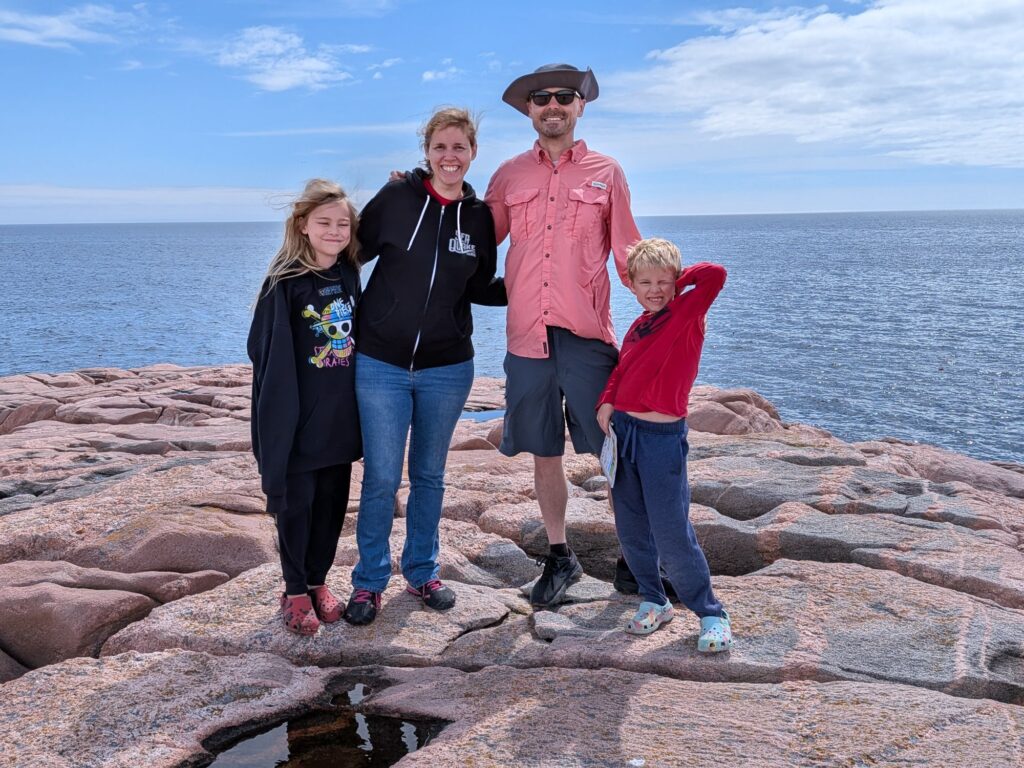
Lakies Head is a rocky coastal stop where you can look out over the Atlantic and learn about the marine life that depends on these cold, productive waters. Green Cove is another short stop with exposed coastal rock, crashing waves, and big views. It is the kind of place where you do not need a long hike to feel like you are standing somewhere special.
Dad watched lobster boats working offshore, pulling traps along the coastline. The day was perfectly clear, the ocean was bright, and the rocky outcroppings made excellent viewing platforms.
The boys mostly saw rocks to climb.
Both interpretations were valid.
Meat Cove: The End of the Road
One of our most dramatic side trips was the drive to Meat Cove, one of the most remote-feeling places we visited in Nova Scotia.
Meat Cove sits at the northern tip of Cape Breton Island, outside the national park. Getting there requires a long detour from the Cabot Trail, with the final stretch on a gravel road. The road is narrow and winding enough that Dad pays attention, Mom may stop making casual conversation, and the kids may briefly look up from their screens because something feels different.
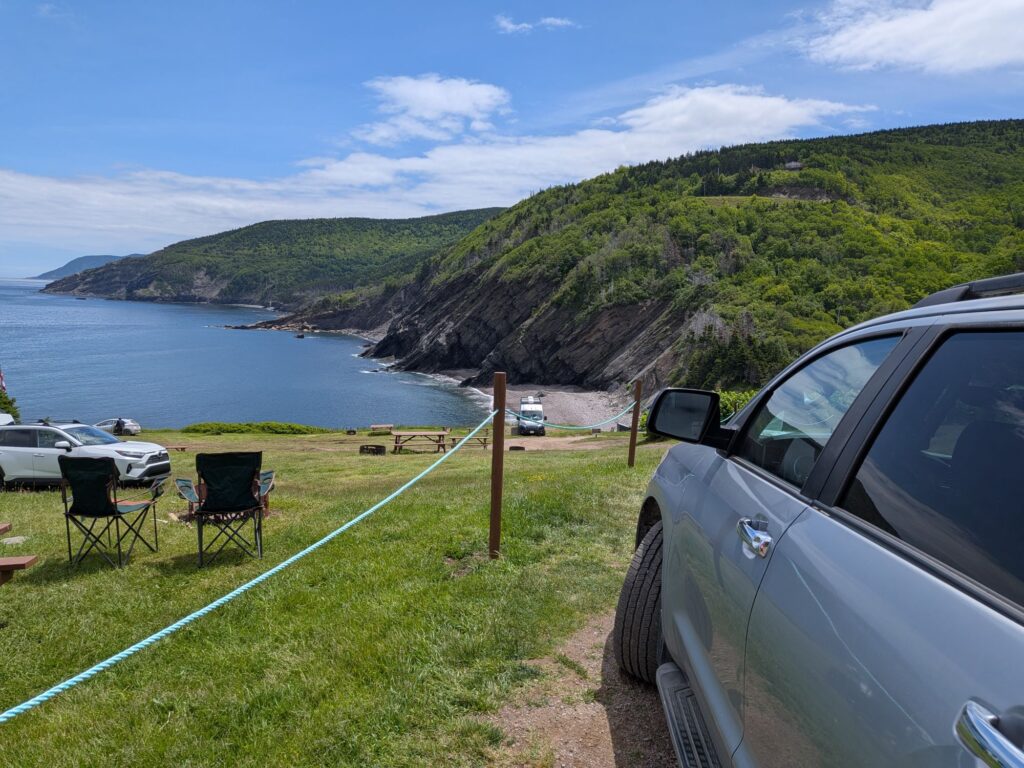
And then the road ends at a campground and cove that looks like the edge of the world.
A river drops down toward the ocean. Cliffs wrap around the water. A waterfall cascades in the distance. The coastline feels wild, remote, and dramatic. This was one of the most remarkable scenes of the entire trip.
Some places are famous because everyone goes there. Meat Cove felt special because it took effort to reach, and when we got there, it felt like we had been rewarded.
Ingonish Beach Rock Surfing
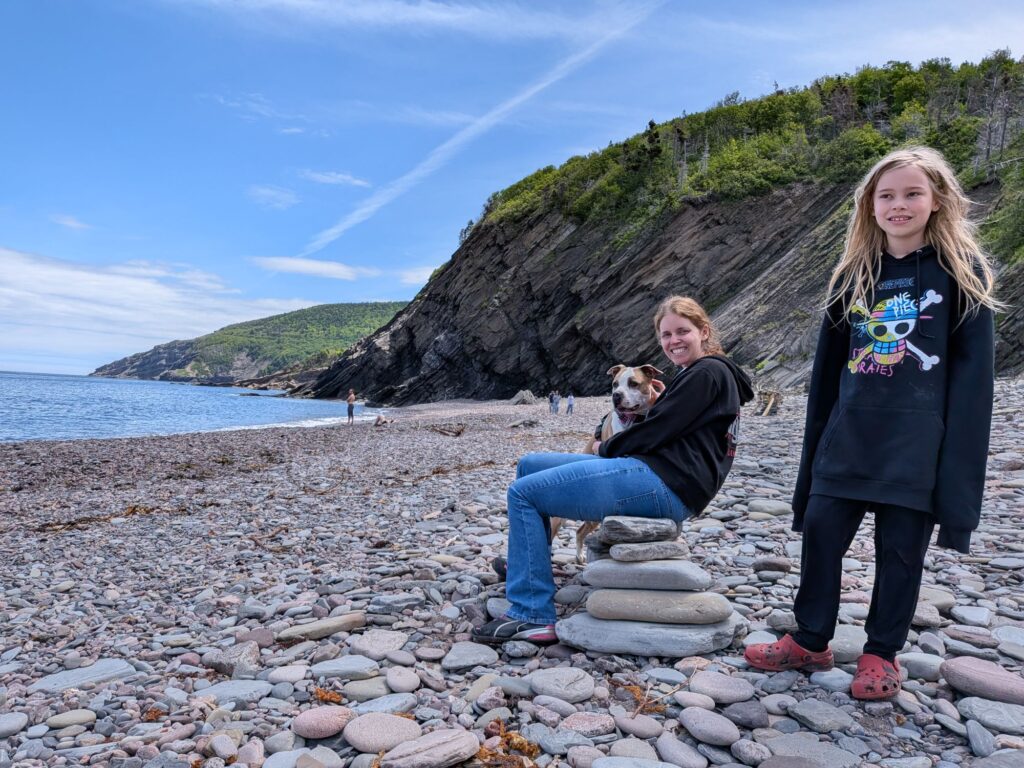
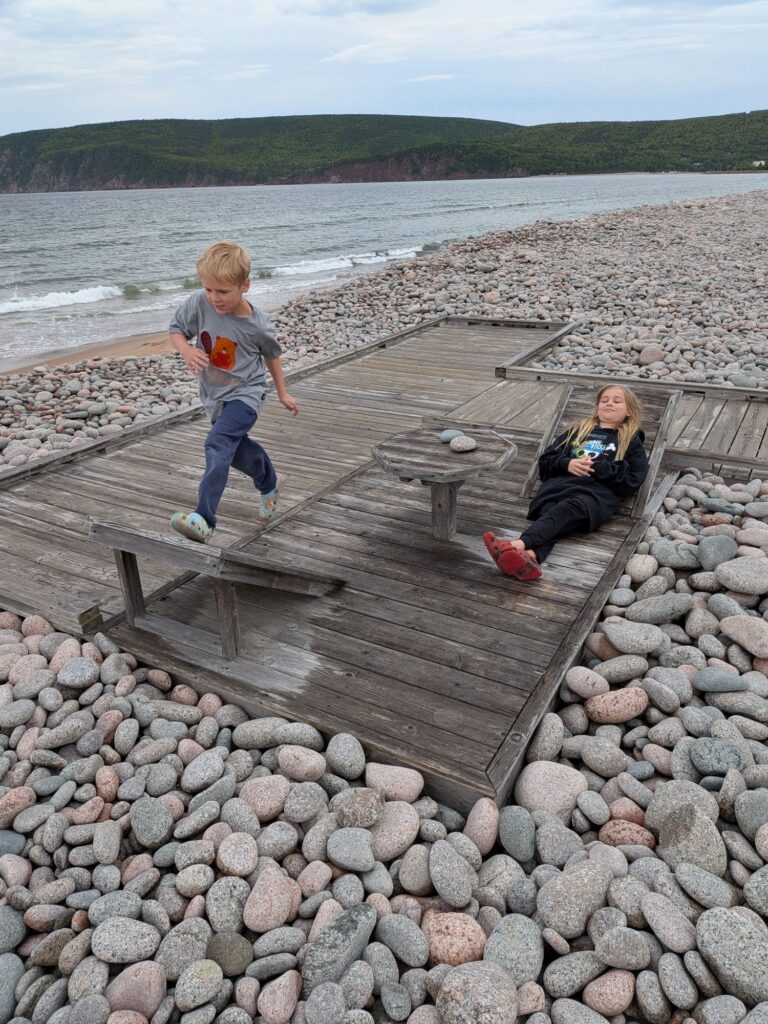
We also explored Ingonish Beach, where the shore is lined with smooth rocks that range from fist-sized to boulder-sized before giving way to sand.
The boys found a way to turn the rock slope into a game. They discovered boards and used them to launch, slide, and “surf” down the rocks toward the sand. Was this an official Parks Canada activity? Absolutely not. Was it invented within three minutes of arrival? Obviously.
Kids have a gift for turning every landscape into a game. Adults see geology. Kids see a ramp.
Lone Shieling Trail: Old-Growth Forest and Scottish Heritage
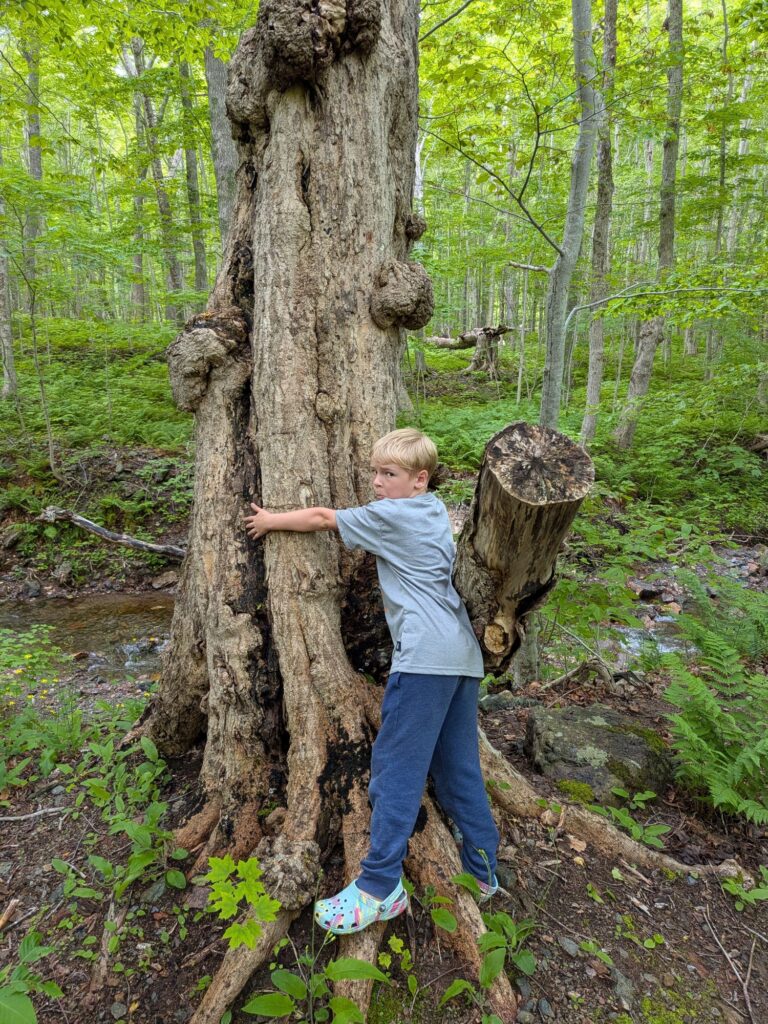
One of the quiet treasures of Cape Breton Highlands National Park is the Lone Shieling Trail. It is short, easy, and very different from the big dramatic coastal overlooks, but it is well worth the stop.
The trail protects old-growth Acadian forest in the Grande Anse Valley, including ancient sugar maples that can be hundreds of years old. Parks Canada keeps access limited to a short interpretive loop because this is a rare and protected forest habitat.
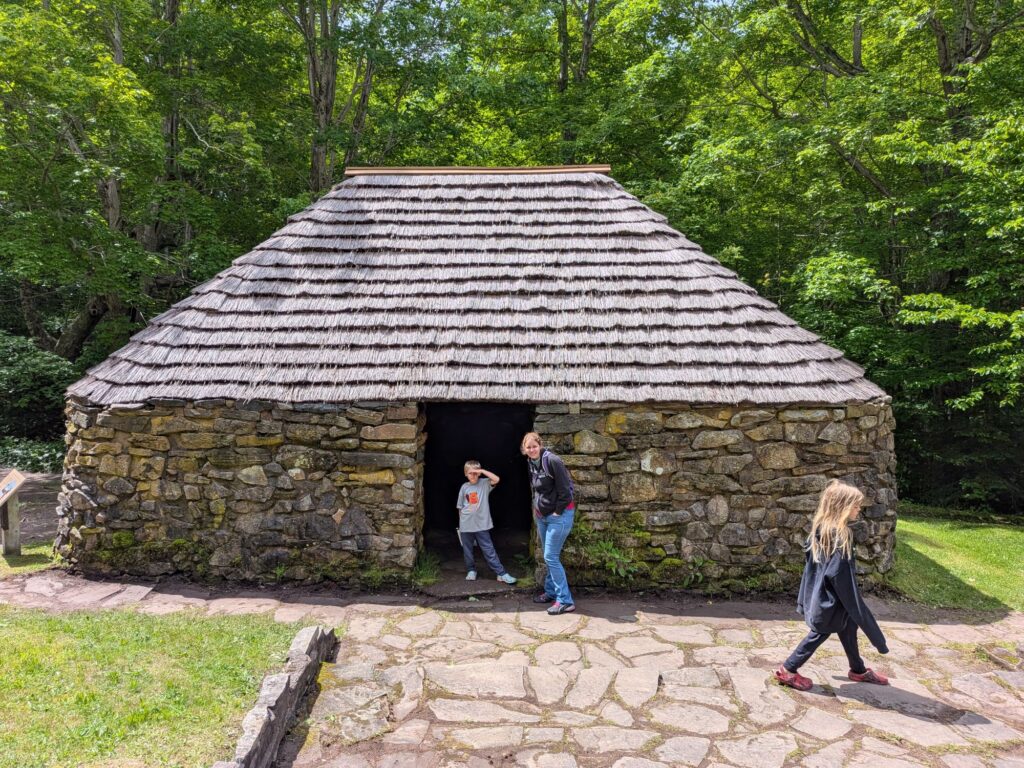
At the beginning of the trail stands a small stone hut called the Lone Shieling. It is a replica of a Scottish crofter’s hut, built as a tribute to the Scottish heritage of Cape Breton. The name comes from a Scottish Gaelic song, and the hut helps connect this landscape to the people who settled here and carried their culture across the Atlantic.
For the kids, it was a short walk in a cool forest with a tiny stone house.
For Dad, it was old-growth trees, cultural history, and a chance to say “shieling” several times while probably pronouncing it wrong.
What Do a Right Whale, an Atlantic Salmon, and a Forest Have in Common?
One evening, we attended a slideshow presentation by Parks Canada interpreters about species at risk. The big three for the night were Atlantic salmon, the North Atlantic right whale, and the forest.
At first, those might seem like separate stories. A fish. A whale. A forest.
But ecosystems do not work in neat little categories.
We learned about Atlantic salmon restoration efforts in Cape Breton Highlands National Park, including work in places like Clyburn Brook. Wild Atlantic salmon have declined sharply in parts of Atlantic Canada, and restoration work includes monitoring, counting, protecting habitat, and trying to rebuild healthy wild populations.
We also learned about North Atlantic right whales. These whales are critically endangered, with only a few hundred left. They calve in the warmer waters off the southeastern United States, including Georgia and Florida, during winter, then migrate north toward feeding areas in places like the Gulf of St. Lawrence during the warmer months. They were heavily hunted in the past because they were slow, floated after being killed, and provided oil and baleen. Today, the major threats are ship strikes and entanglement in fishing gear.
Then came the forest connection.
Healthy forests shade streams, keeping the water cool enough for salmon. Salmon bring nutrients from the ocean back into rivers and forests. Those nutrients help support plants, trees, insects, birds, and animals. Plankton supports marine food webs. Whales depend on those food webs. Everything feeds something, shades something, protects something, or depends on something else.
So what do a right whale, an Atlantic salmon, and a forest have in common?
They are all part of the same living system.
That is a pretty good lesson for a road trip. You start out thinking you are visiting separate places: a beach, a trail, a museum, a campground. But the longer you travel, the more you see the connections.
Caption: A Parks Canada evening program connected salmon, whales, forests, and the ecosystems that hold them together.
The Skyline Trail: Fog, Moose, and a View Worth Waiting For
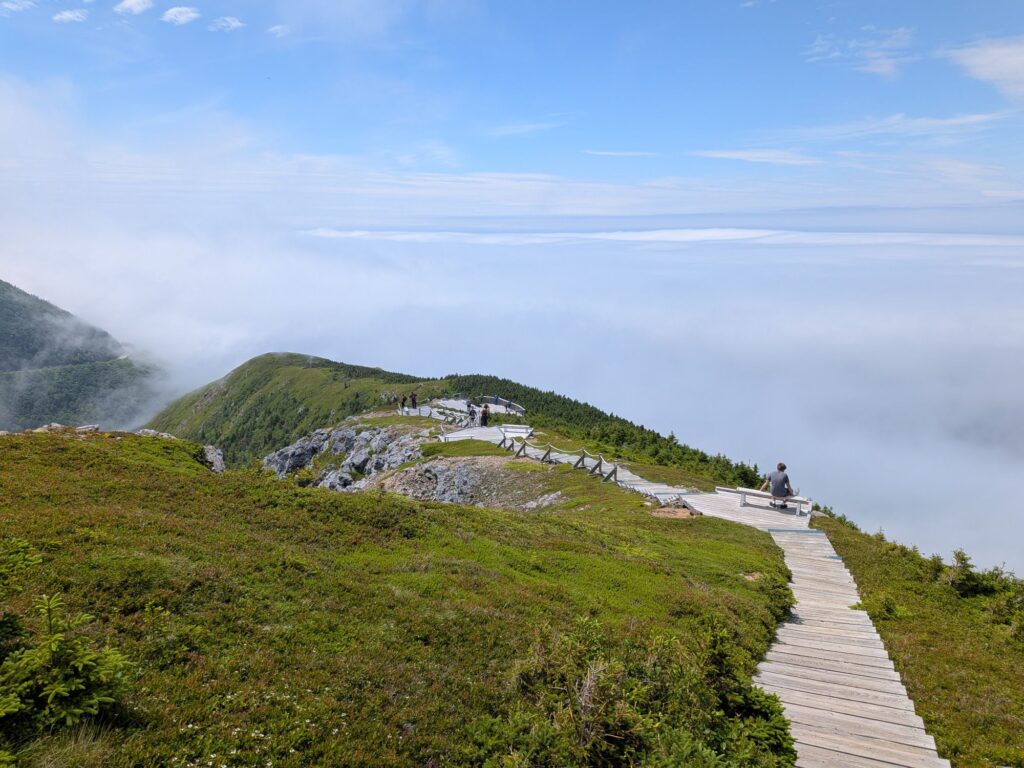
The Skyline Trail is one of the most famous hikes in Cape Breton Highlands National Park, and for good reason. The trail leads out to a boardwalk overlook high above the Cabot Trail and the Gulf of St. Lawrence.
When we started, we were so high up that we were basically in the clouds. Fog hugged the top of the mountain, and for a while it looked like the famous Skyline view might be hidden from us completely.
Along the way, we noticed how many young spruce and fir trees there were and how much of the older growth seemed to be missing. So where did the trees go?
Moose ate them.
That is the simplified Dad version, but it is mostly the point. Moose browsing has had a major impact on forest regeneration in parts of Cape Breton Highlands. Parks Canada has taken steps in some areas to protect young trees, including fencing and habitat restoration efforts, so the forest can recover.
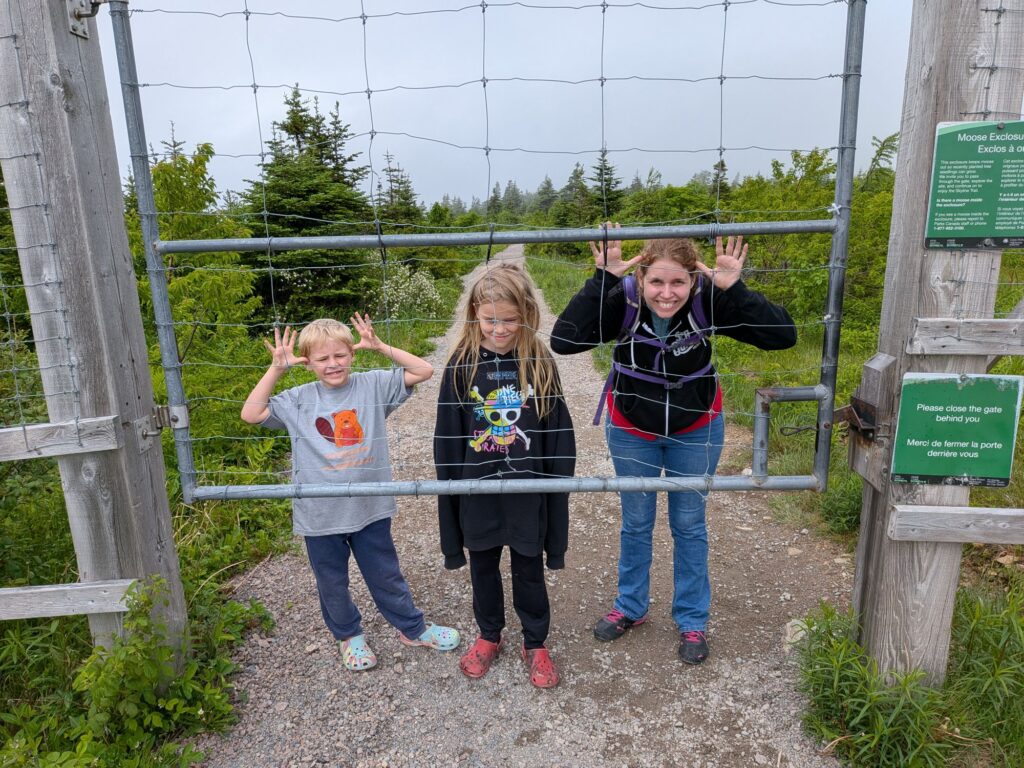
As we walked, the fog shifted in and out. One minute we could barely see beyond the trail. The next, the clouds lifted just enough to tease us with a glimpse of water and cliffs.
Then, right as we reached the famous Skyline boardwalk, the clouds parted.
Suddenly, the view opened up: ocean, cliffs, road, rocks, forest, and the Cabot Trail winding along the edge of it all. It felt like the park waited until the last possible second to reveal the grand finale.
The boys ran down the boardwalk. Dad took too many pictures. Cassy got the payoff view. And Stella, if she had been there in spirit, would have approved of the whole thing.
Nova Scotia Delivered
Nova Scotia gave us a little bit of everything: waterfront camping near Peggy’s Cove, lighthouse rocks, rainy coastal hiking, Halifax maritime history, Mi’kmaw cultural learning, coal mining stories, canal engineering, Cape Breton cliffs, remote gravel roads, old-growth forest, species-at-risk lessons, and one unforgettable foggy hike that opened into sunshine at exactly the right time.
It was not always sunny. It was not always warm. The Wi-Fi was not always fast (or available at all). But it felt real, rugged, coastal, and deeply connected to the water.
That is what made Nova Scotia special.
Some places on a road trip are about the destination. Nova Scotia felt like a whole chapter: ocean roads, working harbors, hard history, resilient communities, and landscapes that made us stop again and again just to look.
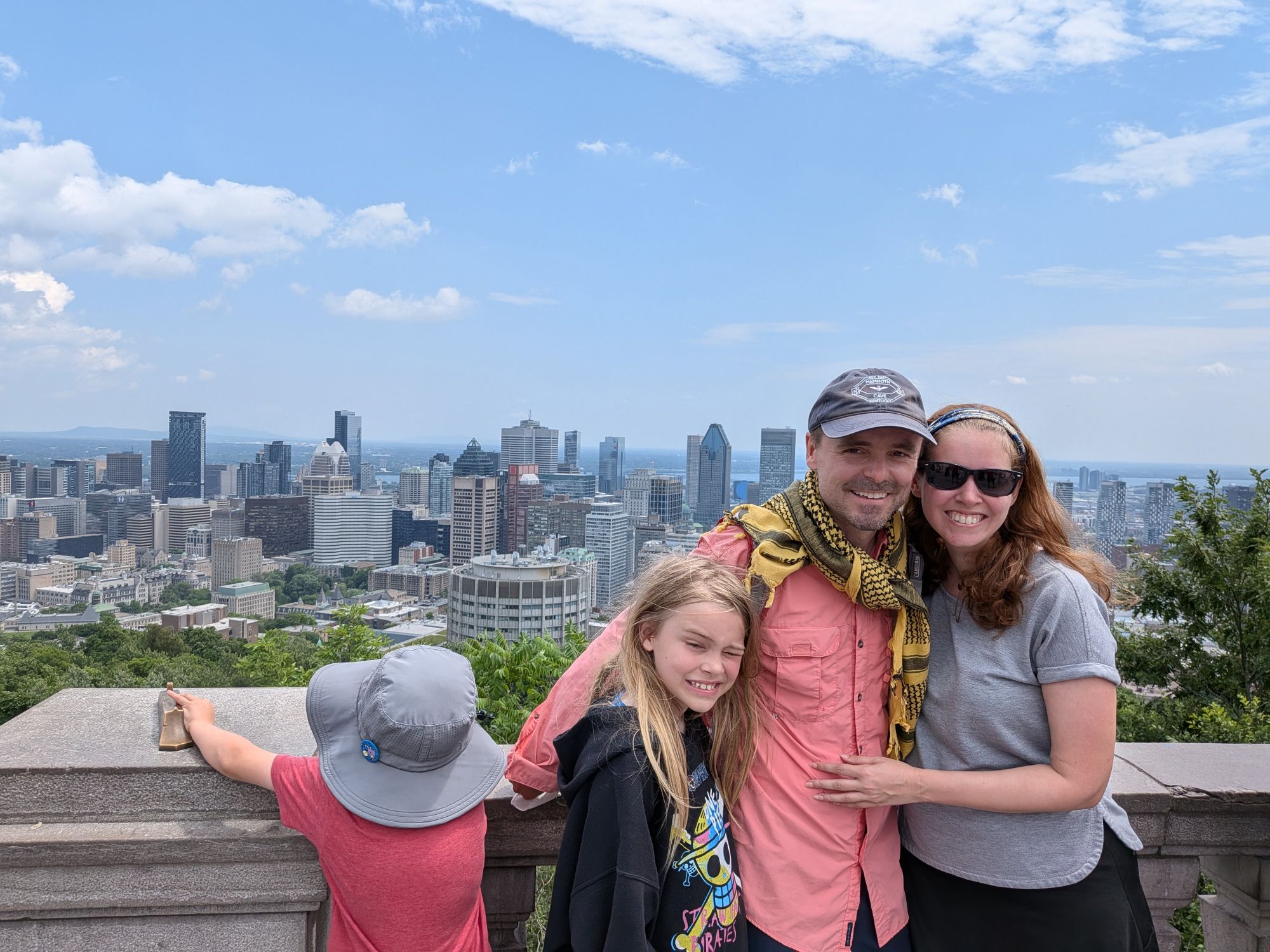
Next up on our Canadian Coastal Quest: more Canada, Montreal, Prince Edward Island, some coastline, and whatever adventure the road decides to hand us next.
Discover more from Dad Can Travel
Subscribe to get the latest posts sent to your email.

Wow! You have to write a book about this trip! It sounds like everyone is really engaging and learning so much about history and ecosystems while enjoying breathtaking views!
Ok Lincoln and Madison, I am expecting to hear about your most memorable experiences on this trip. (Excluding your wifi engagements!) haha
❤️Mom and Debbie